вторник, 24 сентября 2013 г.

A Dance with the Ocean – a Waltz with the Art by Alessandro Baricco and Oleg Menshikov

"He, who wins life, loses fortune"
Leonid Zorin

“I have always been amazed by such things with paintings. They hang for years. Then, for no reason at all, bam, they fall down. They hang there, on a nail, nobody touches them. Then, one moment, bam, they fall like a stone. In absolute silence, everything around is quiet, there is not even a fly nearby, and they fall, for no good reason. Why at that precise moment?” 
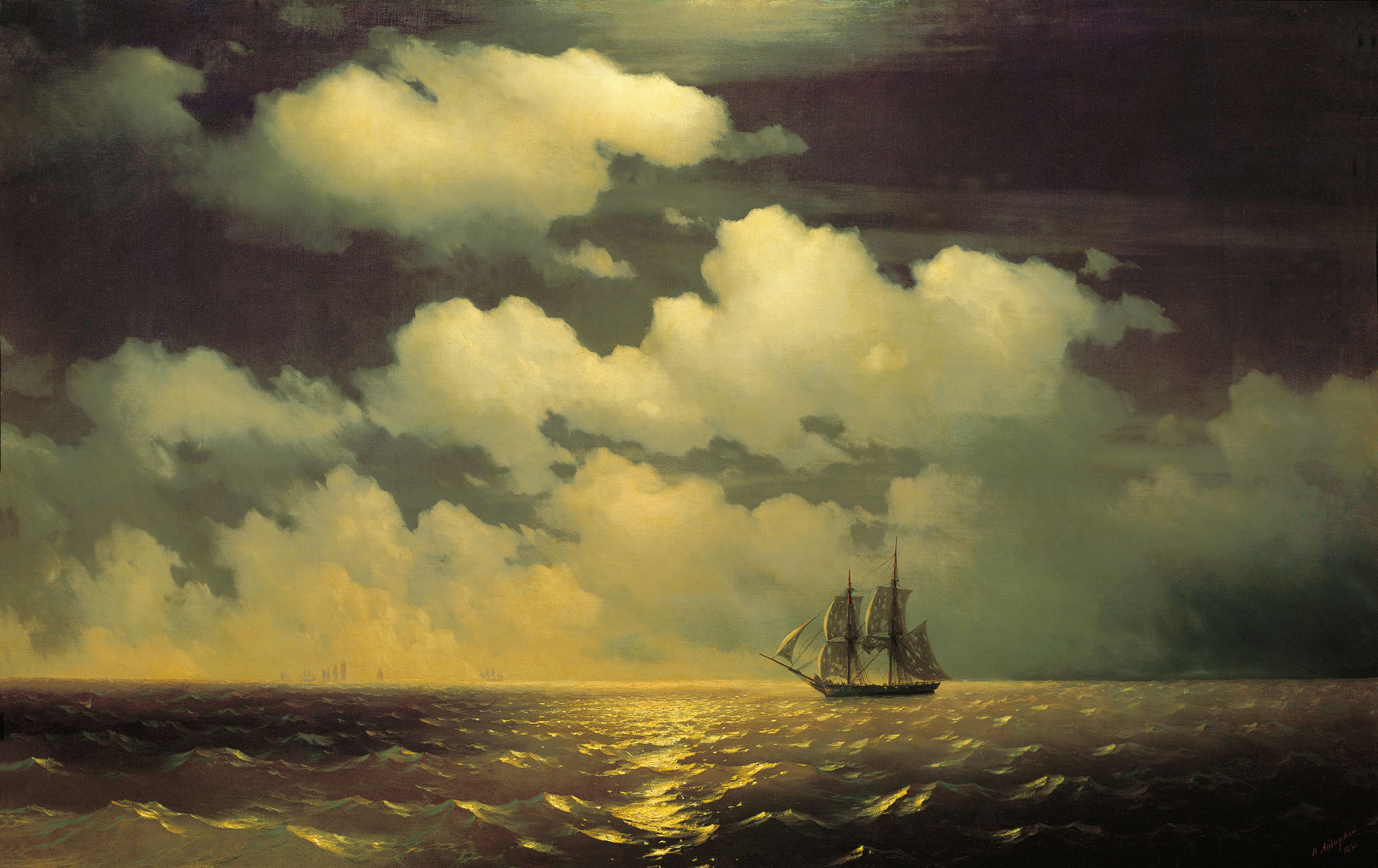
 
Travel on an ocean liner is a dream for many of us… Bam! A painting fell down. Your dream can now become reality. Some of us during our entire lives have not been able to go up on a ship, while others never took the risk of descending upon sinful earth. What is better, to exist in a dream, without living, or to live without a dream? You have a chance to try and understand this, if you embark on a most unusual voyage. You will not need a visa, or a suitcase. It is enough to just buy a ticket… to the theatre…
“Ladies and gentlemen, signore and signora, madam and messier - Welcome to this ship, this swimming town, entirely like the Titanic. Calm down, stay where you are, the signor is worried, I can see it clearly enough. Welcome to the ocean… ”


Just don’t forget to turn off your phones. Video and photo recording is prohibited. Trust us, what you are about to see and to hear, you will not be able to tell anyone. It is too personal. Instead, buy them a ticket for the next “trip”, so they hear everything with their ears and see it with their eyes, and most importantly, feel it with their hearts.
“… before your eyes is a miracle, in your ears – amazement, in your legs – rhythm, and in your heart – the sound of a unique, impossible to imitate, endless ATLANTIC  JAZZ BAAAAND!”
“If you don’t know what it is, then it is jazz.” For some reason it has become fashionable among the rich to listen to the music of the poor…
What kind of ship is it? Oh, it is a unique three-deck dream-liner, history-ship! As the greatest musician of our ocean likes to say: “You are truly alive only as long as you have a good story and someone who you can tell it to.” So, let us first go up.
Here is the first class dance hall, and here is a legendary piano, where a box with the newborn stood. The baby’s parents foresaw a bright future for him. Otherwise, why would they have brought him here? Suppose they dreamt that their child would be found by some tender-hearted rich lady or a gentleman, generous and not poor. But everything turned out much more prosaic. Ladies, prepare your handkerchiefs: he was found by a sailor of the “Virginia”. And, what is worse, he gave the child a name that is completely impossible to understand. I am certain such name is very infrequent among us. Denny Boodman T. D. Lemon Novocento – this is how the new daddy called the baby. How do you like it? It sounds quite promising to me. Such name is difficult to fit into any official document. And no one bothered to do it in all of his 32-year life. Strange, isn’t it?


In this very spot, eight years later, Novocento would be found again, a second time, and he would be playing this same piano, although just a couple of months before his fingers did not know the keys.
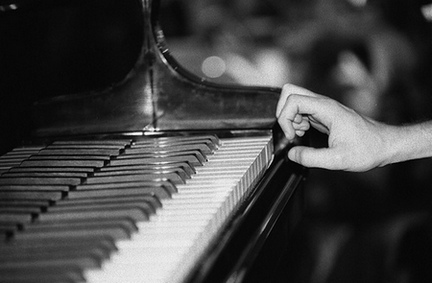


He was sitting on a chair before the piano, his legs not even reaching the floor. And, I swear to God, he was playing… I don’t know what kind of music he was playing. It was simple and … wonderful …”
The weather is changing. It seems there is a storm coming. O! This is your first unusual voyage and your first storm. Let’s see what’s next!


That night, in the eye of the storm, looking like a signor on vacation, he came across me, lost in one of the hallways, with the face of a corpse, looked at me, smiled and said “Let’s go” … we came to the dance hall. And then, me swaying back and forth, and he seeming to have rails under his feet, we came to the piano… “Release the brakes”, he said. “If you trust me, release them”. “He is crazy”, I thought, and then released the brakes.
“And now come over here and sit down”, Novocento said. And then, no one has to believe it, and, to be honest, I would never believe it if anyone told me something like this, but it is true – the piano began sliding along the dance hall, and behind it… And while we were circling among the tables, touching lamps and chairs, I understood that what we were doing at that instance, what we were really doing, was, dance with the ocean. We were crazy dancers, beautiful, drawn into a whirlpool of waltz, on gold-plated parquet of the night. O, yes!”
Dance with the ocean during a storm can be compared to a one-person show in a full theatre of more than a thousand seats. Why?
A one-person show is life since no one has a chance to overdo any scene.
A one-person show is jazz, the music of soul. One artist improvises on the piano of his soul, turning a crowd of a thousand into a jazz orchestra. And everyone has his own music in his head.
A one-person show is a confession. To reach every person in the theatre, you need to turn your feelings inside out, open your soul. And this requires talent, actor’s maturity and bravery.
Every one-person show is a new storm, a new confession. I was in such a one-person show and saw a dance with the ocean – a waltz with the art. What I felt during that storm, I had not felt before, anywhere else. It was like a rapid takeoff, master class. Tears were streaming like hail, but not from sentimentality. No, it was something else. Maybe it was some pitiless sincerity.  
Why so artists do it? Maybe because they feel an inner need to tell something, which they are unable to hold inside themselves. If God gave you such talent, you simply have to give people minutes of happiness. Novocento was not brave enough. He tried to come down from the ship to the earth once, but was unable to make the last step. He was unable to overcome himself.
A duel! What can be scarier: a competition in performance virtuosity between two musicians or an elaborate duel with oneself, or, to be more precise, with the image that was once attached to you by the crowd? Who will win? Is it an exterior shell or your inner self? To find out, you have to see it and to hear it for yourself.
“You are that creator of jazz, are you?” “Yes. And you are that guy, who can only play when he has ocean under his butt, are you?” “Yes.” So they met. Jelly Roll lit up a cigarette. Then he balanced it on the edge of the piano, sat down and began playing Ragtime. It seemed that no one had ever heard this music before. He was not playing. He was sliding 
They were screaming and applauding, they had never seen it before. It was looking like a New Year celebration. And then I was before Novocento: he had a most disappointed face in the world, and also, slightly surprised. He looked at me and said: “But it is absolutely silly…” I did not respond. There was nothing to respond. He turned to me and said: “Give me a cigarette, will you…”
Gentlemen! Smoking here is … recommended. Quite possibly, the ship is full of dynamite. It is time to come down to the engine compartment, since that is where the most explosive is. When the “Virginia” was stuffed with dynamite to be exploded out in the open sea, Novocento came down there and “sat on a box, which looked like it was full of explosive, took off his hat, laid it down on the floor and stayed there, in silence, not knowing what to say.”   
“He really was the greatest. We played music, he was playing something else. He played… Were you ever scared that you would be torn up to the smallest pieces only because of a single thought about the hugeness of the world… Just to think about it, but to live there…”


Maybe many of you simply did not think about it. You should have. Explode, only for a split second, all the vanity of your exterior world, and you will discover a human secret, which is hidden deep inside every one of us.
“You should not think that I am unhappy: this will never happen to me again.”
This is simultaneously happiness and unhappiness, joy and suffering, farce and tragedy. A plain, sentimental, sometimes merry story right in front of the viewers’ eyes first grows into a philosophical parable, and then into a confession – and all of this is a single one-person show, a revelation. Like the ship “Virginia” cutting into a theatre, this show cuts into the soul of every one of us and stays there forever. 
Now you may take a walk around the ship by yourself. But here is a request – do not come close to talent. Otherwise you will break the harmony of the Universe, and the ocean will devour you.
“Take off the brakes… Now don’t be afraid”
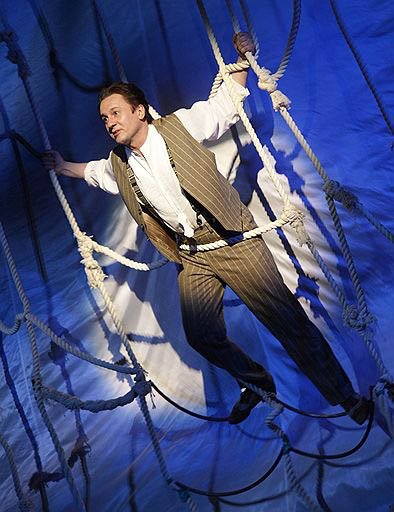

The ship crew:
·         Alessandro Baricco and the characters of the “Novocento” (one thousand nine hundredth). “In people’s eyes you can see what they are about to see, and not what they have seen. This is what he said: what they are about to see.”
·         Oleg Menshikov in the one-person show “1900” and his co-authors. “I always tried to win fortune and never tried to win life.”  
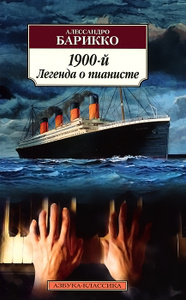
Книга "1900-й. Легенда о пианисте" Алессандро Барикко - купить книгу Novecento ISBN 978-5-389-07361-6 с доставкой по почте в интернет-магазине Ozon.ruКнига "1900-й. Легенда о пианисте" Алессандро Барикко - купить книгу Novecento ISBN 978-5-389-07361-6 с доставкой по почте в интернет-магазине Ozon.ru
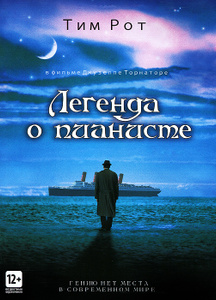
Легенда о пианисте - купить фильм The Legend of 1900 на лицензионном DVD или Blu-ray диске в интернет магазине Ozon.ruЛегенда о пианисте - купить фильм The Legend of 1900 на лицензионном DVD или Blu-ray диске в интернет магазине Ozon.ru

пятница, 17 мая 2013 г.

Diary of Girl mad... in Love the Saint-Petersburg


Last century

Somewhere in the Ural Mountains on Central Street, on the outskirts of the town

I am eating my morning cereal and watching animated version of “Nutcracker.” “Grandma, who wrote such beautiful music?” “Petr Ilich Chaikovski.” “What a large palace! Imagine how long it takes to clean it! Grandma, where is this palace?” “Probably in Petersburg. And the premiere of his ballet “The Nutcracker” took place in the Mariinski Theatre in Saint-Petersburg.  

In this city there are many beautiful palaces and mysterious castles. But now it is called Leningrad.” “Dad used to live there?” “Yes.” “Why does he live here now? If he were living there, then we would be living there with him as well. And I could look at such wonderful palace, if only with one eye. Grandma, are there princes in these wonderful palaces?” “All the princes have gone away.” “Are they coming back?” “They would have to. I hope you are more lucky. Eat your cereal! When you grow up, you can go to Leningrad, and your prince will come there as well.” “Let it happen sooner!” Done with the cereal.

Same place. Same time. Possibly a week later, or, maybe, a month. Morning 

“I don’t want to wash my face. And I won’t!” “Then I am going to call Moidodir!” “Call him from where?” “He lives in Leningrad, in the apartment of the former mayor.” “No, Moidodir won’t come. First, he’s far away. And second, our doorway is narrow. Not going to wash my face!”


Same place. Same time. Possibly a week later, or, maybe, a month. Day

Singing: “What do you dream of, cruiser “Aurora”?” “Mommy, Aurora id the Goddess, who wakes up early?” “Yes, she brings light to gods and to people”. “Then why is she “cruiser”?”

Same place. Same time. Possibly a week later, or, maybe, a month. Evening

Listening to a bed-time fairy tale

Little children!

Never ever

Should you go to Africa,

To walk in Africa!

In Africa there are sharks,

In Africa there are gorillas,

In Africa there are big

Angry crocodiles

They will bite you,

Beat you and hurt you,-

Never ever, children,

Should you walk in Africa.

In Africa lives the highwayman

In Africa lives the villain,

The terrible Barmalei!

 “Daddy, does Barmalei live on Barmaleinaya Street?” “No, he lives in Africa. But there is a street called Barmaleevaya, where Barmalei was supposedly born. His, so to speak, Fathers were the artist Mstislav Dobuzhinski and Kornei Chukovski.” “Strange, two Dads and no Mom… Did Barmalei move?”

 Same place. Same time. Possibly a week later, or, maybe, a month. Night

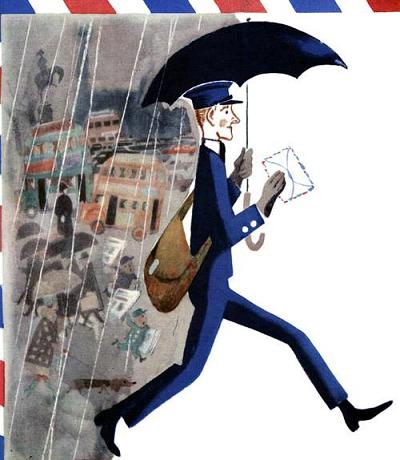
A loud knock on the door in the middle of the night. Daddy opens the door. A telegram. Mom has a nephew. “Great! Mom, where was he born?” “In Leningrad”. “So what is a Leningrad mailman? Directly from Leningrad?” “Why do you think so?” “Well, he brought news from Leningrad. And, in the book by Samuel Marshak it says:

Who is knocking on my door

With a fat bag on his belt,

The number 5 on a copper badge,

In a blue hat?

It is him,

It is him,

Leningrad mailman.

Some are so lucky. Why was I not born  in Leningrad?”

Many years later…

Still last century. Perestroika

Somewhere in the Ural Mountains. High school. Literature lesson

Discussing a new film, in whisper: “Did you see “Sea Cadets, forward” last night!? “Yes”. “Me, too. Wonderful film” “So did I. I liked it also”. “He is so fine!” “Just a pet!” “He has such nice hair”. “Who are you talking about?” “About Sasha Belov”. “And I am talking Alexey Korsak”. “I meant Duke Olenev”. “Great! At least we won’t fight!” “Hey, what are you discussing?” “Sea Cadets. But you are late. We’ve gone through all the princes.”. “I have a prince of my own”. “Who is he? Why do we not know him?” “You do so know. “Once upon a time there lived an absent-minded man, from Basseynanya street…” “That is funny!” “Why? If you take the frying pan off his head, and exchange the shirt for the pants, then he will be quite a man. How is he not a prince?”

End of the last century. The perestroyka era.

Somewhere in the Ural Mountains, on a street named after an editor of Bashkir tales, a talented scientist and simply a good man.  
“Мама-папа, ну, можно я поеду в Петербург с друзьями?” “Мы это уже обсуждали. Смотри, что творится в стране? Куда ты собралась? У тебя экзамены на носу. Сиди, учи”. “Сейчас март. А экзамены только в июне. Еще куча времени. Пожалуйста”. “Нет. Тема закрыта”.

The end of the last century. Hard times in Russia

USA. Los Angeles

“Mom, Dad, I want to go to Leningrad this spring. I need your permission in writing”. “First, it is no longer Leningrad. It is now called Saint Petersburg. Secondly, we already discussed it. Look, what is going on in the Soviet Union”. “It is no longer Soviet Union. It is now called Russia”. “And, besides, where are you going? You have exams coming up. You need to study”. “It is only March. The exams are in May. There is a lot of time left. Please”. “No. The subject is closed”.

Early XXI century. Russia. Saint-Petersburg

It is the second week that I am in the city of my dreams. I cannot believe it. Petersburg! I am madly in love with you! For me, you are the Fairytale City! I won’t trade you for any other city with real palm trees. Even with this terribly… wonderful weather! I love your center and am smitten by your newer quarters.

Every morning I visit the Hermitage and spend 3-4 hours there. I realize that Istill have not seen even a tenth of what I could see in the biggest museum in Russia. Funny, it turns out that hermitage is a place for a hermit, for solitude. What solitude with these crowds of tourists? Maybe in the basement? But that is the territory of cats, who serve our culture. What a pity I will not be in the Hermitage for the March Cat Day. The last Saturday in March is still far away. Even the founder of this city had a lot of respect for cats. I recently found out that the last name of Peter the Great’s great-great-grand-father was Koshka.


I am walking along the Throne Hall of the Winter Palace as quietly as Princess Fike once did, her first time here. In this wonderful city her dream became a reality. I also hope that my fairy-tale happens in this city. No, I am not asking for a throne. I am fine with a prince without a kingdom.

During those two weeks I also visited Barmaleeva Street, in S. M. Kirov’s omuseum, where I finally met Moididir and examined the various wonderful toys, which could have belonged to my grandmothers and grandfathers. I also enjoyed the old toys in the Doll museum and the Toy museum.

I have spent quite a bit of time looking for Basseynaya Street. It turned out to be near the Elektrosila subway station. And Samuel Marshak’s Basseynaya Street is in the very center of the city, near the Liteyniy Avenue. It is now called Nekrasov Street. I visited the Communications Museum, where I heard a story about a mailman, who had delivered a letter to Boris Zhitnikov, a children’s writer. “It is he, it is he, a Leningrad mailman.” In the Book House, which is on Nevskiy Avenue (with a globe on the top) I bought a lot of books from my childhood for my nephews and friends’ children.

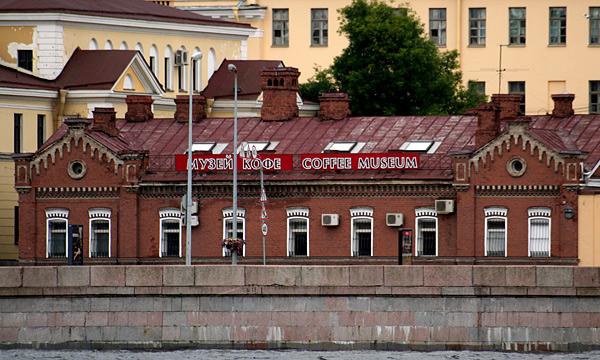
I visited museum-theatre “The house of the tale.” It is a miracle: I am back in my childhood! I had read about wonderful masquerades, set up by the Empress Elisabeth. But sometimes it is better to see than to read. In the Russian drama museum in the Alexandrinskiy Theatre there is a huge collection of theatrical costumes! I wanted to try on many of them and got quite sad when they would not let me try one of the ballroom dresses. Therefore, to raise my mood, I went to the case “North” to try wonderful pastries. Full and happy, I decided to visit two more museums: coffee and chocolate. Oh those narcotic smells of coffee and chocolate. I really need to see them as well.


And in the evening… I am going to the Mariinsky Theatre. They say that if you have not been to the Mariinsky Theatre, then you have not been to Saint Petersburg. Today I am going to the premiere of “Nutcracker”. I wonder, what is he going to surprise me with? I hope a wonderful tale is waitng for me…

Early XXI century. Russia. Saint Petersburg

Mariinskiy Theatre. Entr’acte. Theatrical café   

I am eating amazing ice cream. The best in the world. “Is this table free?””Yes.” “Hello! My name is Pete. No, Petya. Well, Peter. And you?” Good evening! Are you a foreigner?” “Well, yes and no. I used to live here, a long time ago. And now I am living, or lived, in America.” He is like the man from the Basseynaya Street. The grandma was right. Princes do return… “So, what did you say your name is?”

понедельник, 15 октября 2012 г.

Rodolfo and Rudolf: They tangoed with life


“Tango is a pure expression of what poets try to express in words, but fail: struggle can be enjoyable and pleasant”
(Jorge Louis Borges)

Passion, joy, pain and sorrow – this is tango. If you think that modern and fashionable dance was only forbidden in the USSR, then you are wrong. In 1914 Russian Education Minister L. A. Kasso sent a menacing letter to the heads of education in each province forbidding even mentioning the word “tango” in Russia’s schools. He wrote, “Due to clearly indecent character of the new and increasingly popular dance, called “tango” and as a result of information obtained by the Ministry about attempts to teach it to the students, I kindly ask you to take the strictest measures to prohibit its teachings in your schools. And also, ensure that your students, male or female, do not attend dance lessons, where the shamelessness of “tango” is taught”.

But we shall take a risk and look into this “shamelessness”.

Figure 1.
"Cabeceo" – an invitation to tango – is a true ritual. It starts with an inviting look, which has to contain hints of flirt, directed toward the partner. A fleeting smile, a slight bow, and the eyes can answer: “Yes!” 

Rodolfo Valentino and Rudolf Nureyev invited to tango life itself, which agreed to it, and they started to swirl in the rhythm of tango.

What can be common between an Italian boy, who was born in the 19th century and lived a short, but bright life, and a Soviet boy, whose life was one big challenge to the society? There are so many coincidences in their biographies…

Figure 2.
Salida” – literally means "exit", but in tango this is the main entry into the dance. “Parada” – stop. “Ocho” - "eight" (a part of a turn). The main step in tango is the longest step; the leg has to be slightly bent at the knee, the entire body slightly tense, but without losing elasticity and plasticity of the impression. Otherwise one may fall or lose balance, and with an excessive tenseness one will not be able to complete the dance and will get exhausted in the middle of it.

Rodolfo Alfonso Raffaello Pietro Filiberto Guglielmi di Valentino d`Antoniolla was born on 6 May 1895 in a small provincial Italian town called Castellaneta in the family of a former circus performer.


Рудольф Хәмит улы Нуриев was born in a train, headed for Vladivostok, between Irkutsk and Sludyanka on 17 March 1938. His mother Farida along with her daughters was traveling to join with her husband, who served as a military commissar in Siberia.

Circus families and military families: roads, roads, roads … Although, at a certain point in time, both families left the nomadic lifestyle behind.

As a child, the little Rodolfo Valentino was no different than his peers. But one day, one of his female relatives caught his look and said: “My God, this cutie will go far. He has amazing eyes. So little, but from the way he looks at you, your skin burns.”  Rodolfo honestly tried to become like everyone else. He completed studies in agriculture in Genoa, although before that he even thought about a military career.


Military career for his son – this is what Rudolf Nureyev’s father, Hamet, dreamed about. He tried to turn the boy into a replica of himself, which only served to distance Rudolf from his father.
Since early childhood, the little Rudic liked to listen to the music, which came out of the radio set. And after he saw ballet for the first time at a local theatre, Rudic had a dream – to dedicate his life to dancing. “Ballerina” is what his peers called him. They already were entering adult life, working or studying, while he was “doing nothing”, performing in dance troupes in Ufa. 

Rodolfo Valentino did not have the luck of dancing as a child. He left for Paris to study dancing only after graduating from the academy. When he came back to Italy, Rodolfo was a dependent of his parents for a while. He was searching for himself.


In the meantime, Rudolf Nureyev was accepted as a statist in the troupe of the Ufa theatre of opera and ballet. Rudolf was offered a contract, which he refused, dreaming about a serious education in choreography. In 1955, while visiting in Moscow, he obtained a permission to apply to the Moscow school of choreography. But, he even went a step further. He traveled to apply in Leningrad. He came directly to director Shelkov and said “I am Rudolf Nureyev. I want to study here.” And… following exams, he was accepted. Although, Vera Kostrovitskaya, one of the oldest teachers at the school, told him “You can become a brilliant dancer, or nobody. The latter is likely.” It was a challenge, and Rudolf Nureyev liked challenges of the fortune. So, he remembered these words with gratitude his whole life. After graduation he received invitations from three different theatres: Kirov (nowadays, Mariinsky), Bolshoi, and Stanislavski. This happens extremely rarely. Rudolf accepted the invitation of the Kirov theatre. He was invited by Natalia Dudinskaya herself, a prima of the time. One time, a long time ago, in a similar manner, Mathilde Kschessinska had invited Vaslav Nijinsky.
What a strange twist of the fate. The little Rudolf Nureyev’s first dance teacher back in Ufa was Anna Udaltsova, a professional dancer, who had performed in Sergei Diaghilev’s corps de ballet.

Figure 3.
Gyro” – a turn and a change in direction – are very important elements in tango. Smoothness and precision of the turn have a defining significance.

In 1913, to avoid a military draft and with his family’s permission, Rodolfo Valentino leaves for America. To survive in New York, he changes one profession after another: a street vendor, a gardener, a dishwasher, a cab driver. He learns how to dance tango, which was the most popular dance at the time, and then performs as a dancer-gigolo New York’s “Maxim”. Then Valentino works in a traveling theatre, where he plays a role in the play “No one home”. In 1917 he moves to LA. In Hollywood Valentino debuts in an episodic role in the film “Child Support”. It was exactly at that time that he changes his complicated Italian name Pietro Guglielmi to a more easily remembered Rodolfo Valentino. At first the name change did not help him. One episodic role was followed by another, but success did not come. Only after the release, in 1921, of the film “The Four Horsemen of the Apocalypse”, did Rodolfo Valentino wake up famous. How passionate was the Argentine tango in the film! Since that moment tango and Rodolfo Valentino have been synonymous for many people.

In 1961 during a guest performance in Paris, Rudolf Nureyev asked for political asylum in the West. “Sometimes in life you have to make decisions, like lightning, much faster than you can think. I understood it even while dancing, when something went wrong. I also felt it while standing at the Bourget Airport in the shadow of a huge airplane, which was going to take me back to Moscow. Its huge wings hanged over me, like the hands of a wicked magician from the «Swan Lake». Should I have obeyed and made the most out of it? Or, like the ballet main character, should I have refused the order and made a dangerous, possibly fatal dash for freedom? …I did not want to be told what my future should be or what way to consider correct. I want to try and find it for myself. This is what I understand as freedom” - Rudolf Nureyev wrote. He was immediately accepted to the best stages of Europe. In February 1962 Nureyev signed a contract with the London Royal Ballet and was a leading dancer there, along with his partner Margot Fonteyn up until 1970.
In 1977 he rejected an offer to become the Director of the Royal Ballet – he wanted to continue dancing. But in 1986 he did become the Director of the Opera National de Paris, which he managed for 6 years. By the way, there was a time when Vaslav Nijinsky was offered the same position at the Opera National, but he rejected as he was working on creating his own theatrical enterprise.

Figure 4.
Adorno” - adorning – is a necessary attribute of tango. These can be static and dynamic, lyrical and rhythmical.  

After Rodolfo Valentino and Beatrice Dominguez had performed tango in the film “The Four Horsemen of the Apocalypse”, there appeared a Valentino fashion – “tango-mania”. Smoking salons “Tango”, bright-orange color “Tango”, clothes fashion “Tango”… There is even a special figure in tango, called Valentino, after the artist – a tango master. Few people know that Rodolfo Valentino sang. Do you remember the film, “Some Like It Hot”? A millionaire invites Daphne to a yacht to listen to Valentino’s records. Rodolfo Valentino only played in 15 films, but women came to almost every single show with his participation all beautiful and made up, as if it was a date with a lover. Sometimes Valentino made money off of such admiration – he would dance tango with a female film watcher, and was paid several thousand dollars a week for it. An American psychologist, who studied the phenomenon of the actor’s popularity, wrote “… Valentino is agile, slender, and amazingly charming. He is romantic and full of the echoes of the distant blue Italy. He is a symbol of the gone knighthood. He is a light kiss, the sigh of a flute, and the clank of sabre. He is a compilation of King Arthur, Lancelot, Robin Hood and … Don Quixote, Romeo for all ages, an eternal troubadour sighing at the window. ”
One of the brightest tandems in the history of ballet is the tandem of Margot Fonteyn and Rudolf Nureyev. “Since the first second I knew I had met a friend. It was the lightest moment in my life since I had stayed in the West” – he wrote later. 1962 – “Giselle”, 1963 – “Marguerite and Armand”, 1964 – “Swan Lake” (in the Vienna Opera they were asked encore 89 times!) By the way, in the span of his career, Rudolph Nureyev danced practically all the leading male performances of classical ballet. He gave up to 200 performances per year around the world. Dance critic John Percival wrote: “There is not another dancer in the world, who had as much influence on the history, development and perception of ballet as Rudolph Nureyev. He changed people’s views. A boy from a small Ural town became the reason for a change in the entire art genre.” It was precisely because of Nureyev that the ballet male dancer came out of the shadow of the female ballerina. Similar to Vaslav Nijinsky, he showed the beauty of the male body in dance, frequently coming on stage only wearing a leotard and a dance corset.


Reverencia profunda” – a deep bow. Adios” – good-bye.
Rodolfo Valentino died suddenly after an appendix removal in 1926. Up until 1956 female admirers came to his grave on the day of his death. Rodolfo Valentino left after himself a luxurious villa “Eagle’s Nest” in Beverly Hills, 8 cars, 5 horses, a yacht, 12 dogs, 300 neckties, 2000 shirts and debts, which exceeded his worth by 250 000 dollars. In Italy he was raised a Catholic. In America he rejected the faith, but then before death came back to Catholicism, asking for permission and blessing.

In 1984 Rudolph Nureyev found out that he had AIDS. But that did not stop him from active creativity. He continued to direct ballets. 1985 – “Washington Square”, 1986 – Bach’s Suite, 1988 – “Cinderella”, 1992 – “La Bayadère”. The great dancer lived with HIV for over 10 years and died on 06 January 1993. Nureyev is buried in Paris, in the cimetière communal de Sainte-Geneviève-des-Bois. His friends and relatives made a service for him according to both Islamic and Christian Orthodox customs as shortly before death he accepted Orthodoxy.

In 1977 Rudolph Nureyev played the role of Rodolfo Valentino in Ken Russell’s film “Valentino”. Many thought that Nureyev played himself. When broadcasting the news of Nureyev’s death many TV channels around the world showed scenes from the film “Valentino”, where Rudolph Nureyev was depicting the recently departed Rodolfo Valentino.

How many coincidences in their different biographies…  What is common among them? Origin, struggle for their own place, for their own self, emigration, ambition, a certain closeness of the souls and a fanatical love for the dance. The dance was the main love of their lives, both Rodolfo Valentino’s and Rudolph Nureyev’s.

“I dance for my own pleasure. Trying to please everyone is not original.”
Rudolph Nureyev